

 ChatGPT
 Perplexity
 Claude
 Gemini
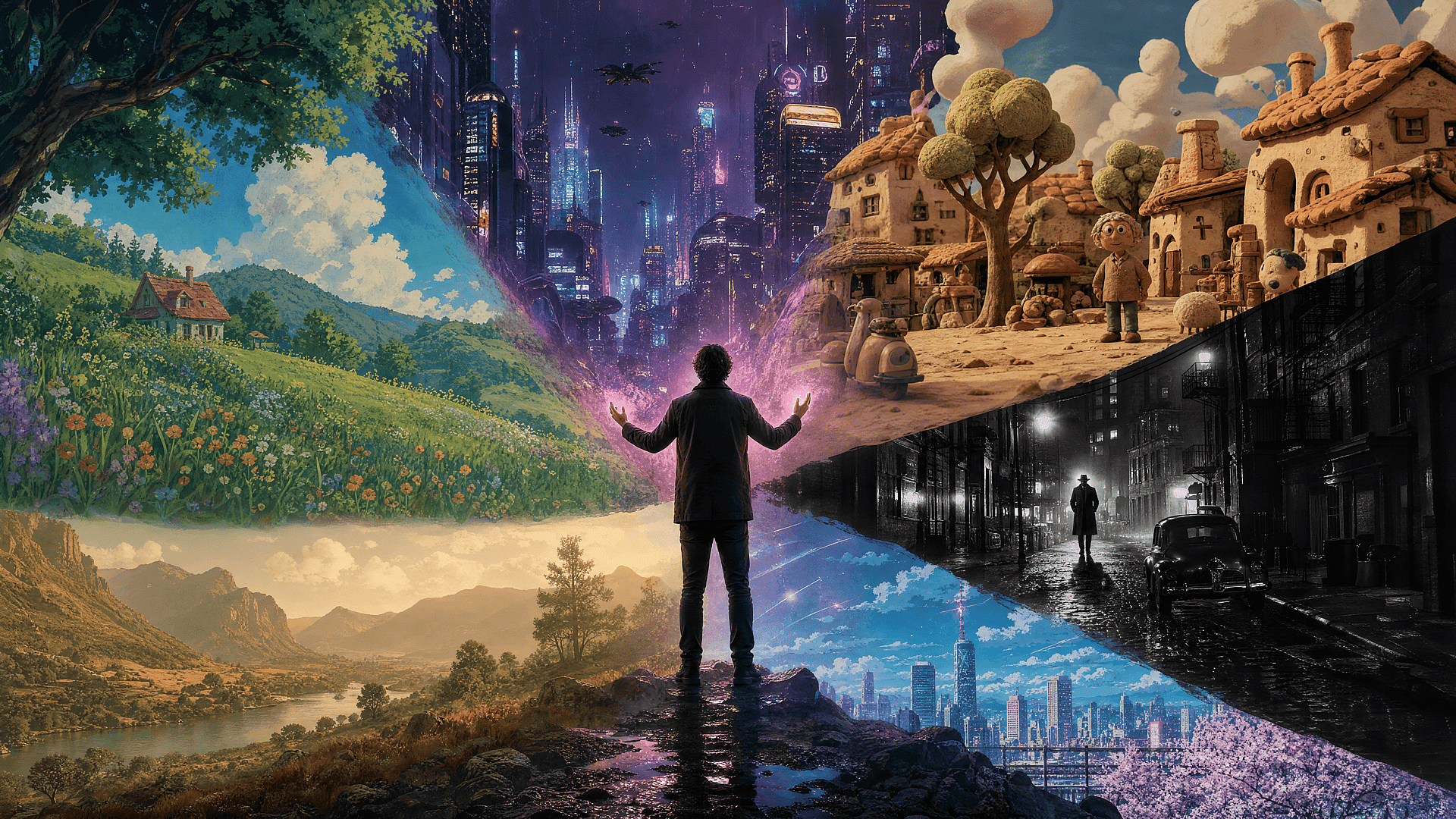
Almost every maker and storyteller has a backlog of unrealized projects, and it's rarely for lack of ideas. The short film that never made it off the page, the campaign you could see frame for frame but couldn't get greenlit, the music video you'd have made if the budget had been three times what it was. You could picture all of it. What you couldn't do was get it out of your head and onto a screen, because the entire production system stood in the way: the crew, the gear, the budget, the schedule that never lined up, the years of craft training between an idea and the skill to execute it. Visual storytelling sat behind a kind of paywall, one measured not just in money but in time, access, and years of craft, and it asked whether you could afford all of that long before it ever asked whether you had something worth making. Somewhere along the way, most of us quietly accepted that directing was something other people did.
We've watched this exact thing happen once already
A few years ago, software worked the same way. Building anything real meant knowing how to code, which meant years of training and a fluency most people never had the time or access to develop. The idea lived in someone's head and stayed there, because the distance between the idea and the working product was filled with syntax and tooling and accumulated technical knowledge.
But then, with tools like Claude Code, vibe coding arrived. At first the reaction from real engineers was to dismiss it: it was a toy, a shortcut, a way for people who didn't really understand systems to cobble together something flimsy. For a while that skepticism even looked reasonable, until the tools got good, faster than almost anyone expected, and the story quickly changed. As of this year, the vast majority of professional developers are using AI tools as a regular part of their work, and a meaningful and growing share of production code is generated rather than typed by hand. The people who had scoffed were now shipping with it, because it turned out not to be a beginner's crutch but a velocity tool, the thing that let a good engineer move ten times faster.
The detail that matters most in that story is the one people skip over: none of it worked without a human in the seat. The most rigorous measurements put AI-authored production code well below the breathless headlines, and the developers who got the most out of these tools were the ones who knew exactly what to ask for, what to keep, and what to throw away while AI just handled the execution. The judgment, the taste, the sense of what the thing should actually be, stayed human. What really changed was who got to build at all: people who'd never written a line of code suddenly shipped the app, the website, the little tool they'd always wanted, and the category widened to include them.
OpenArt Director brings that same unlock to visual storytelling
The first wave of AI video looked, for a moment, like it had already solved this. It tore down the production barrier overnight: no crew, no gear, no budget, just a prompt and a few seconds of footage in return. But it quietly put a new barrier in the old one's place: you could generate a clip, but to make anything that resembled a real piece you were stitching dozens of them together, fighting to keep a character's face consistent from one shot to the next, regenerating until the seams more or less disappeared. Access had opened, but direction, the actual work of shaping a story into a finished piece, was still out of reach: you weren't directing so much as operating a slot machine and assembling the winnings by hand.
This is the shift we set out to create for video: not a faster way to generate clips, but the same change vibe coding brought to software, the means to make a finished piece by describing what you want and shaping it as it comes back, with you in the creative seat the whole time.
We call it vibe directing
You describe what you want to see and react to what comes back, giving the kind of direction you'd give a creative team: make it feel more like a memory, make the second act land harder, this character should be softer. Our AI video Director takes the note and the piece changes. You're not quite operating film equipment, but you're also not just firing off prompts and hoping the clip that comes back is close enough to your vision. It's an entirely new form of creating: you're co-directing a whole piece with AI, with its own story, pacing, voice, and sound, rather than a five-second fragment you'll have to stitch to forty others later. Every creative decision that matters, what the story is, how it should feel, where it should land, what stays and what gets cut, remains yours.
In practice it works across the whole arc of making something, not just the moment of generation. You start with whatever you have, a single sentence, a script, a song, a mood board, a product shot, a voice memo, and Director helps you develop it: proposing a story structure, building out characters and the worlds they move through, suggesting a visual style and tone. From there it produces the piece, with the visuals, dialogue, music, and sound generated together rather than assembled afterward. Then you refine by talking to it, the same way a director gives notes on set, until the thing on the screen matches the thing in your head. Bring more as you go, your own voice, a reference clip, a brand's guidelines, and it folds them in, holding everything consistent as the project grows.
What comes back is a finished piece, not raw material. Director generates up to five minutes in a single continuous take, with the visuals, dialogue, music, and sound designed together rather than bolted on afterward, and it holds your characters, products, and style steady from the first frame to the last. When you want to change something, you say so. Shorten the opening. Give her warmer light in the second scene. Make the music more anxious. For most decisions, that conversation is the fastest way to shape the result. And when you want to get your hands dirty, the control is right there waiting: a full timeline and storyboard view where you can drop into individual scenes and refine things frame by frame. Direct the whole thing through conversation, reach for the manual controls, or move between the two as freely as you like. The piece is yours to shape however you want to shape it.
Directing a story is not the same as building software
For all its usefulness, the vibe coding parallel breaks down in one important place, because compelling visual storytelling is the harder, stranger craft. Code either runs or it doesn't, while a story has to make someone feel something, which is a far slipperier target. Pacing, performance, the exact emotional temperature of a scene, the way a cut lands, the silence before a line: these are judgment calls with no correct answer, only a better or worse one, and they're the difference between a video that technically exists and one that actually moves you.
That's why the human in the seat matters even more here than it does in software. Director can hold a character consistent across five minutes and sync the music to the emotional rhythm of a scene, and those are genuinely hard things to pull off. But the question of whether the second act should land harder, and what "harder" even means for this particular story, is one only a person with a point of view can answer. The tool gives you the means, and what you make of it still depends on what you bring to it, the same way it always has.
A lower barrier, a higher ceiling
What vibe coding ultimately proved is that lowering the barrier didn't lower the ceiling. The professionals didn't get worse, they got faster, and a whole population of people who never could have built anything started shipping real work. The category got bigger without getting shallower, because the thing that separated good software from bad was never the typing, but knowing what to build and why.
Vibe directing is arriving at the same moment: the people who already direct for a living get a way to clear the folder of projects the budget never allowed, and the people who always had the eye but never the access finally get to make the thing they've been envisioning all along. Welcome to the future of visual storytelling. We can't wait to see what you vibe direct.